
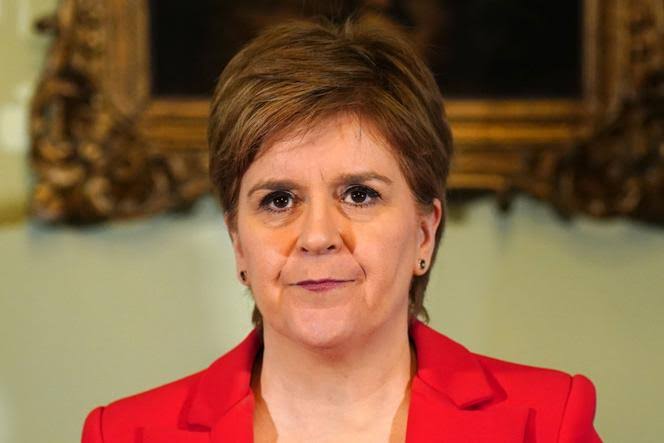
As Scotland’s former First Minister and one of the most recognisable political figures in the UK over the past decade, Nicola Sturgeon’s public appearances at football matches have long sparked curiosity about which club, if any, holds her genuine allegiance.
According to reporting on the football loyalties of prominent political figures, Sturgeon has been described as a supporter of Ayr United, the Scottish club based in her home region of Ayrshire. Reports suggest her connection to the club traces back to childhood, with her father taking her to matches during the tenure of manager Ally McLeod — a formative link between Sturgeon and grassroots Scottish football long before she entered frontline politics.
However, Sturgeon’s football identity in the public eye has been shaped less by club loyalty and more by her association with the Scotland national team. Throughout her time as First Minister, she was a highly visible presence around major tournaments, recording video messages of support ahead of Scotland’s Euro 2020 campaign and appearing at fan zones alongside supporters during international fixtures. In fact, some political commentary has noted that Sturgeon appeared to deliberately confine her public football support to the national team rather than throwing her weight behind a specific club — a pragmatic choice given Scotland’s fiercely tribal club football landscape.
That caution makes sense in the context of Scottish football’s broader political dynamics. The country’s club scene is often viewed through the lens of the Old Firm rivalry between Celtic and Rangers, and Scottish politicians have historically been cautious about publicly aligning themselves with either side, given how closely those clubs’ fanbases can map onto other social and political divides. Sturgeon’s SNP predecessor as First Minister, Alex Salmond, was open about his support for Heart of Midlothian, while former First Minister Humza Yousaf has spoken about his lifelong support for Celtic, following in the footsteps of earlier First Minister Jack McConnell, another Celtic supporter.
Sturgeon’s approach was notably different. Rather than nailing her colours to one of Scotland’s dominant clubs, her public engagement with football tended to focus on the national side and on supporting Scottish football more broadly during difficult periods — most visibly during the Covid-19 pandemic, when she repeatedly addressed the financial pressure facing clubs across the country and thanked fans for community fundraising efforts that helped smaller clubs survive.
She also found herself directly involved in football-related controversy during her time in office, including publicly criticising crowd scenes following Rangers’ 2021 league title win, when thousands of fans gathered in Glasgow in breach of lockdown restrictions — a moment that placed her, however reluctantly, at the centre of one of Scottish football’s biggest storylines that year.
So while some regional reporting connects Sturgeon to Ayr United through family history, her most consistent and visible football identity throughout her political career has been as a supporter of the Scotland national team — a deliberately broader, less partisan position for a politician navigating one of the country’s most passionately divided sporting landscapes.